

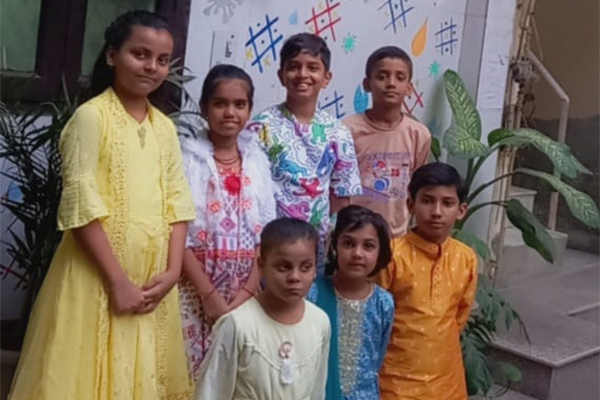
French is one of the more popular third-language options in CBSE schools — and one of the easiest to fall behind in without regular speaking and grammar practice.
French is one of the more commonly offered third-language options in CBSE schools from Class 6 onward, alongside Sanskrit. Unlike Sanskrit, French uses an unfamiliar script-adjacent pronunciation system and verb conjugation that changes with every subject pronoun — which means it's a subject that rewards regular, spaced practice far more than last-minute revision before a test.
Why French needs regular practice, not just revision
A child can memorise a French vocabulary list the night before a test and still struggle the following month, because French grammar (gendered nouns, verb conjugation, sentence structure) doesn't stick from one-time memorisation the way a list of English synonyms might. It needs to be used repeatedly — written, spoken, corrected — across several weeks.
What our Class 6 to 9 French batch covers
Our French classes for Class 6 to 9 are built around the same principle we use across BMI: small batches, syllabus-aligned content, and material a child can revisit on their own, not just verbal explanation in the room. Grammar rules are introduced, then practised through writing and short spoken exercises, so a child isn't only reading French but actually using it.
Grammar, vocabulary and conversation — how we balance all three
Most students lose marks in French for one of three reasons: shaky grammar (wrong verb form), thin vocabulary (not enough words to construct a full sentence), or simply not being used to seeing the language outside the classroom. We deliberately balance classroom time across all three rather than over-focusing on grammar drills alone, because a student who only memorises rules but never uses them in a sentence tends to freeze on application questions in exams.
| Focus area | What it means in class | Why it matters |
|---|---|---|
| Grammar | Verb conjugation and gendered nouns introduced, then practised through writing | Doesn't stick from one-time memorisation — needs repeated use |
| Vocabulary | Built up alongside grammar so students have enough words to form full sentences | Thin vocabulary is one of the most common reasons students lose marks |
| Conversation | Short spoken exercises so French is used, not just read | Keeps students from freezing on application-based exam questions |
As with our other language batches, sessions stay aligned to the school's own NCERT/CBSE-linked syllabus, so classwork connects directly to what's coming up in school tests.
Frequently Asked Questions
Founder & Academic Director, Beautiful Minds Institute. Shalini has led BMI's small-group teaching approach across Maths, Science, SST, English, Hindi, French and Sanskrit for school-going children in Dwarka Sector 7.
More from the blog
 How to Choose the Best Tuition & Coaching Center in Dwarka Sector 7 / Palam Colony
 Sanskrit Classes for Class 6 to 9 in Dwarka Sector 7: Why It Still Matters
 Class 10 to 12 Maths & Science Coaching in Dwarka: Building Exam-Ready Concepts
Have a question?
Call +91-9958443646 / +91-8700908377 or email info.beautifulminds@gmail.com
Contact Us