

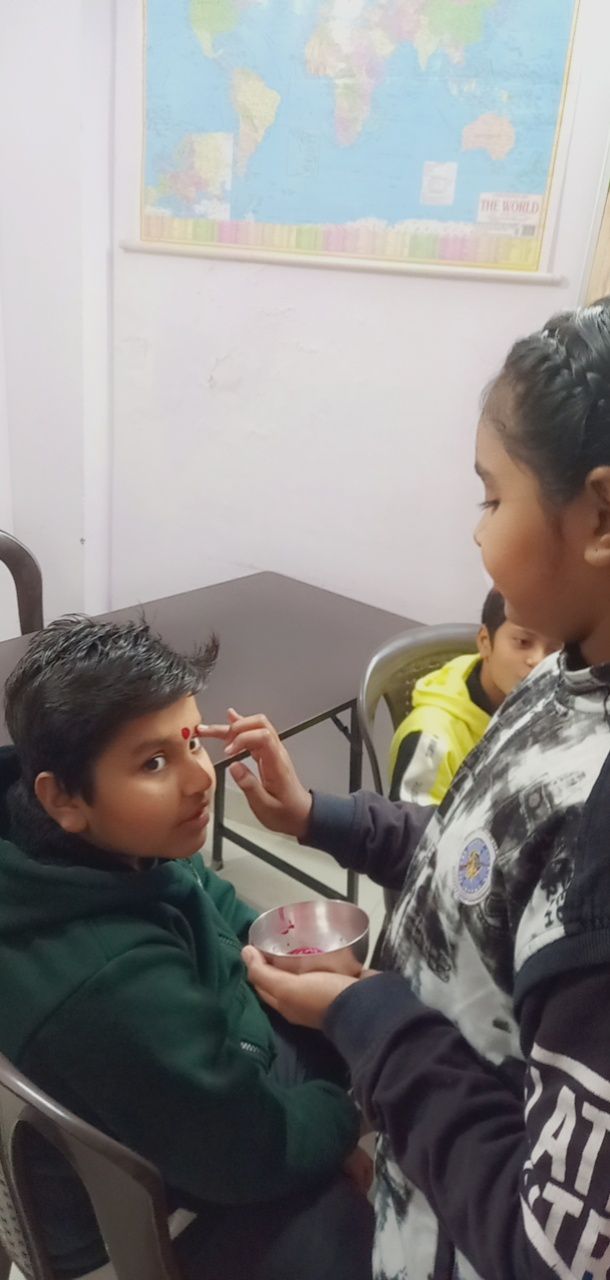
Most CBSE schools introduce Sanskrit as a third language from Class 6. Here's how our weekly Saturday Sanskrit batch, led by a Sanskrit scholar, helps students actually keep up.
From Class 6 onward, most CBSE schools introduce Sanskrit as a third language alongside Hindi and English. For many students it's their first real brush with a classical language — new script conventions, grammar rules (sandhi, karak, verb forms) that don't map neatly onto English, and a vocabulary that isn't reinforced anywhere outside the Sanskrit period. It's a subject where a student can go from confident to lost in the space of one missed chapter.
Why Sanskrit still trips students up
Sanskrit is graded like any core subject in the CBSE scheme, but it usually gets the least attention at home simply because most parents didn't study it themselves and can't help with homework the way they might for Maths or English. That gap between "graded seriously" and "supported at home" is exactly where students start losing marks, and where a dedicated weekly class makes the most difference.
What our Saturday Sanskrit batch covers
At Beautiful Minds Institute, Sanskrit is taught every Saturday by a qualified Sanskrit scholar, in a session of about one and a half hours, for students from Class 6 to Class 9. The batch stays close to the school syllabus so a child isn't learning something disconnected from their own textbook — grammar rules are explained, then drilled through translation and writing practice, with revision built in ahead of school tests.
| Day | Duration | Class group | Focus |
|---|---|---|---|
| Saturday | 1.5 hours | Class 6 to 9 | Grammar, translation practice, exam-style revision |
How Sanskrit grammar helps Hindi and English too
One thing that surprises parents: Sanskrit grammar isn't wasted effort even for a child who finds the subject dull. Because Hindi grammar borrows heavily from Sanskrit (case endings, sandhi rules, verb roots), a student who is solid in Sanskrit grammar usually finds Hindi grammar noticeably easier, and picks up formal sentence structure in English faster too. It's one of the reasons we treat Sanskrit as more than "one more subject to clear."
How parents can help at home
You don't need to know Sanskrit yourself to help. The most useful thing a parent can do is keep the rhythm going between Saturday classes — a short 10-minute recap of that week's grammar rule, and making sure the workbook or notes given in class actually get revisited before the next session, rather than only opening them the night before a test.
Frequently Asked Questions
Founder & Academic Director, Beautiful Minds Institute. Shalini has led BMI's small-group teaching approach across Maths, Science, SST, English, Hindi, French and Sanskrit for school-going children in Dwarka Sector 7.
More from the blog
 How to Choose the Best Tuition & Coaching Center in Dwarka Sector 7 / Palam Colony
 Class 10 to 12 Maths & Science Coaching in Dwarka: Building Exam-Ready Concepts
 French Language Classes for Class 6 to 9: What to Expect at Beautiful Minds Institute
Have a question?
Call +91-9958443646 / +91-8700908377 or email info.beautifulminds@gmail.com
Contact Us